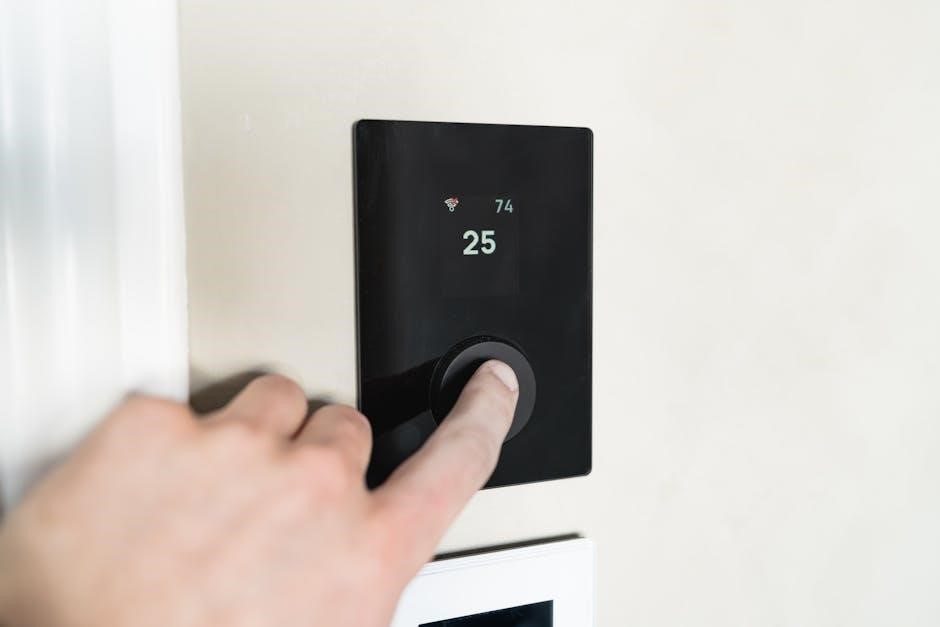
Honeywell T4 Pro Installation Manual PDF: A Comprehensive Guide
Embark on a seamless setup experience! This detailed guide unlocks the full potential of your Honeywell T4 Pro, offering comprehensive instructions and support for a secure installation.
Understanding the Honeywell T4 Pro System
The Honeywell T4 Pro represents a significant advancement in home and business security, offering a robust and flexible platform designed for comprehensive protection. This system isn’t merely an alarm; it’s a fully integrated security hub capable of managing a wide array of sensors, detectors, and communication methods. Understanding its core components and capabilities is crucial for a successful installation and optimal performance.
At its heart, the T4 Pro control panel serves as the central processing unit, coordinating all security functions. It supports both wired and wireless devices, providing scalability to accommodate various property sizes and security needs. The system’s advanced features include customizable zones, multiple user codes, and remote access via mobile apps, empowering users with complete control and awareness. Familiarizing yourself with these aspects before installation will streamline the process and ensure a properly configured system.
What’s Included in the T4 Pro Package?
Upon opening your Honeywell T4 Pro package, you’ll find a carefully assembled collection of components designed for a complete security solution. Typically, the core inclusion is the T4 Pro control panel itself, the brain of the entire system, responsible for managing all connected devices and security protocols.
Alongside the panel, expect a standard set of wireless door and window contacts, providing initial perimeter protection. A motion detector is also commonly included, enhancing coverage against intrusion. The package usually contains a yard sign and window decals to deter potential intruders. Furthermore, you’ll receive a comprehensive installation guide, and often, mounting hardware for easy panel and sensor placement. Verify all components against the packing list to ensure everything is present before commencing installation.
System Compatibility & Requirements
The Honeywell T4 Pro system boasts impressive compatibility, supporting a wide array of Honeywell 5800 series wireless sensors, including door/window contacts, motion detectors, and glass break sensors. It also integrates seamlessly with various life safety devices like smoke and carbon monoxide detectors.
Regarding requirements, a stable 120V AC power source is essential for the control panel. A dedicated phone line or a compatible internet connection (Wi-Fi or Ethernet) is needed for communication with the monitoring center, if professional monitoring is desired. Ensure your home network meets the system’s security standards. The system operates optimally within a temperature range of 32°F to 120°F. Confirm these prerequisites before installation for a smooth and reliable setup.

Pre-Installation Checklist
Prepare for success! This crucial step ensures a smooth, efficient installation process, minimizing potential issues and maximizing your system’s performance and reliability.
Tools Required for Installation
Ensuring a smooth installation requires having the right tools readily available. A Phillips head screwdriver is essential for mounting the control panel and securing various components. A flathead screwdriver will also be needed for certain terminal connections. Wire strippers are crucial for preparing the wiring for secure connections to the control panel and sensors, preventing shorts or loose connections.
A digital multimeter is highly recommended for verifying power supply voltages and testing zone wiring continuity. A drill with appropriate drill bits is necessary for mounting the control panel and sensors to walls or surfaces; Don’t forget a level to ensure the control panel is mounted straight.
Additionally, consider having wire connectors (wire nuts) for making secure splices, a labeling machine for clearly identifying wires, and a network cable for potential IP connectivity. Safety glasses are paramount for eye protection during drilling and wiring. Finally, a reliable ladder will be needed for reaching higher mounting locations.
Safety Precautions During Installation
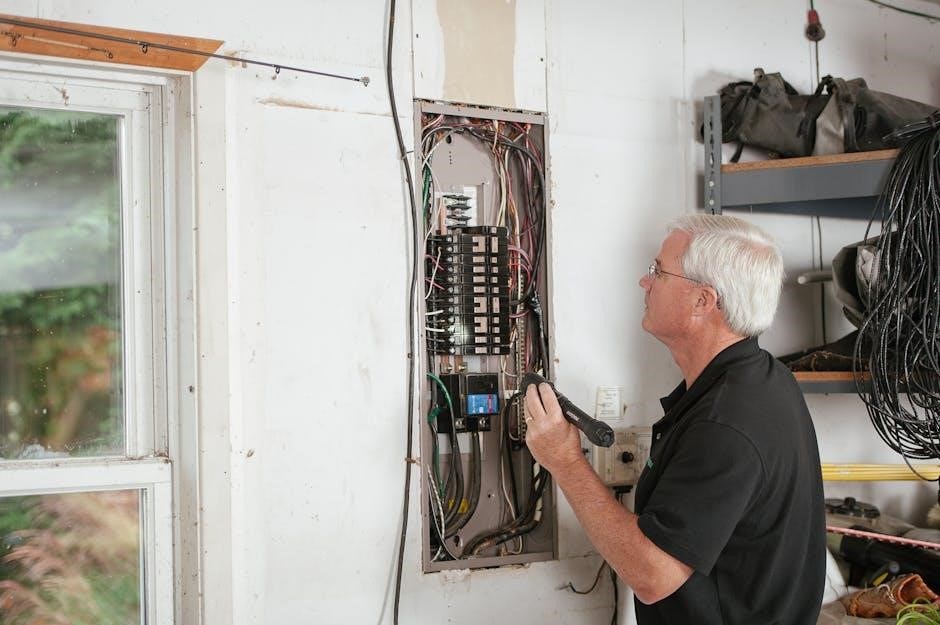
Prioritizing safety is paramount during the Honeywell T4 Pro installation process. Always disconnect power to the circuit before commencing any wiring work to prevent electrical shock. Exercise extreme caution when working with electrical wiring, and if unsure, consult a qualified electrician. Wear appropriate safety glasses to protect your eyes from debris during drilling and wiring.
Be mindful of ladder safety when working at heights, ensuring it’s securely positioned and stable. Avoid working in wet or damp conditions to minimize the risk of electrical hazards. Properly insulate all wiring connections to prevent shorts and potential fire hazards.
Never bypass or disable any safety features of the system. Familiarize yourself with local electrical codes and regulations before starting the installation. Keep the work area clean and organized to prevent trips and falls. Finally, always test the system thoroughly after installation to confirm proper operation and safety;
Wiring Diagram Overview
Understanding the wiring diagram is crucial for a successful Honeywell T4 Pro installation. The diagram details the connections between the control panel, sensors, power supply, and other system components. It clearly illustrates the designated terminals for each device, ensuring correct and secure wiring. Pay close attention to wire colors and labeling for accurate connections.
The diagram typically showcases the power supply input, zone input connections for doors, windows, and motion detectors, and communication bus wiring. It also indicates the wiring for the siren and any optional modules.
Refer to the specific wiring diagram included with your T4 Pro package, as variations may exist. Carefully trace each wire path and verify connections before applying power. A properly followed wiring diagram minimizes errors and ensures optimal system performance and reliability.

Installing the Control Panel
Secure the system’s brain! This section guides you through mounting the control panel and establishing essential wiring connections for power and zone inputs.
Mounting the Control Panel

Strategic placement is key! Begin by selecting a central, easily accessible location for the T4 Pro control panel, ensuring it’s near a power outlet and offers convenient wiring access. Avoid areas prone to extreme temperatures or moisture.
Utilize the provided mounting template to accurately mark the screw holes on the wall. Drill pilot holes and securely fasten the mounting bracket using appropriate screws – ensuring it’s level and firmly attached to the wall structure.
Carefully align the control panel with the bracket and gently push it into place until it clicks securely. Double-check that the panel is firmly seated and doesn’t wobble. Proper mounting ensures stable operation and simplifies future maintenance.
Connecting the Wiring – Power Supply
Powering up your system safely! Before connecting the power supply, always verify the power is OFF at the breaker. Locate the designated power input terminals on the control panel – typically labeled for voltage and polarity.
Connect the provided power adapter’s wires to the corresponding terminals, ensuring a secure and snug fit. Double-check the polarity to prevent damage to the system. Incorrect wiring can void the warranty and cause malfunctions.
Once the wiring is confirmed, carefully route the power cable, avoiding any pinch points or sharp bends. After confirming all connections, restore power at the breaker and verify the control panel illuminates, indicating successful power-up.
Connecting the Wiring – Zone Inputs
Establishing secure zone connections! Zone inputs are crucial for sensor communication. Identify the zone input terminals on the control panel, typically numbered sequentially. Refer to your system’s wiring diagram to determine the correct zone assignment for each sensor.
Connect the sensor wires to the corresponding zone input terminals, observing proper polarity if applicable (usually indicated on the panel). Ensure wires are securely fastened to prevent loose connections and false alarms.
For normally closed (NC) sensors, connect the wires as indicated in the manual; Test each zone after wiring to confirm proper communication with the control panel. A successful test confirms the sensor is correctly registered and functioning.
Sensor Installation
Secure your premises effectively! This section details the precise placement and mounting procedures for each sensor type, ensuring optimal detection and reliable system performance.
Door and Window Sensor Installation
Protecting entry points is paramount for a robust security system. Begin by carefully selecting the appropriate location on both the door or window frame and the moving component. Ensure surfaces are clean and dry before applying the provided adhesive strips – proper adhesion is crucial for reliable operation.
Align the sensor and magnet, maintaining the specified gap distance detailed in the full installation manual PDF. Incorrect spacing can lead to false alarms or system failures. Once positioned, firmly press the sensors for the recommended duration to guarantee a secure bond.
Test each sensor individually after installation, utilizing the system’s test mode to verify proper communication with the control panel. Refer to the Honeywell T4 Pro Installation Manual PDF for detailed troubleshooting steps if any issues arise during testing or operation. Consistent testing ensures ongoing security.
Motion Detector Installation
Strategic placement of motion detectors is key to maximizing your system’s effectiveness. Choose locations that cover key areas, avoiding direct sunlight, heat sources, and drafts, as these can trigger false alarms. Mount the detector at the recommended height, typically 7-8 feet, ensuring a clear line of sight.
Before securing the detector, utilize the “walk test” feature described in the Honeywell T4 Pro Installation Manual PDF to optimize its sensitivity and coverage area. Adjust the sensitivity settings as needed to minimize false alarms caused by pets or environmental factors.
Properly secure the detector to the mounting surface using the provided hardware. Regularly test the detector’s functionality to confirm continued reliable operation, referencing the PDF for detailed troubleshooting guidance if necessary.
Glass Break Detector Installation
Protect vulnerable entry points with strategically placed glass break detectors. These devices listen for the specific sound frequencies created when glass shatters, offering an additional layer of security. Install detectors within the recommended range of windows and glass doors, typically up to 20-25 feet, consulting the Honeywell T4 Pro Installation Manual PDF for precise specifications.
Avoid mounting detectors near noisy appliances or areas prone to vibrations, as these can cause false alarms. Utilize the test mode, detailed in the manual, to verify proper functionality and sensitivity after installation. Adjust the sensitivity settings if needed to minimize false triggers.
Securely mount the detector using the provided hardware, ensuring a stable and reliable connection. Regular testing is crucial to confirm continued operation and responsiveness.
System Programming & Configuration
Customize your security! The Honeywell T4 Pro allows personalized settings, user codes, and zone configurations, all detailed within the installation manual PDF.

Initial System Setup & Enrollment
Begin with a solid foundation! The initial setup of your Honeywell T4 Pro system, thoroughly explained in the installation manual PDF, is crucial for optimal performance. This process typically involves powering on the control panel and establishing a connection to the monitoring center, if applicable.
Enrollment of each security device – door/window sensors, motion detectors, and glass break detectors – is a key step. The manual provides clear, step-by-step instructions on how to ‘teach’ each sensor to the system, assigning it a unique zone number. Accurate enrollment ensures the system correctly identifies and responds to security breaches.
Pay close attention to the manual’s guidance on verifying communication with the central station. Successful enrollment and communication testing are vital before fully activating the system, guaranteeing reliable protection for your property. The PDF details troubleshooting steps for common enrollment issues.
User Code Creation & Management
Secure your system with personalized access! The Honeywell T4 Pro installation manual PDF details a robust user code system, allowing multiple users with varying levels of access. Creating unique master codes, user codes, and duress codes is essential for security and accountability.
The manual guides you through programming these codes directly on the control panel, emphasizing the importance of choosing strong, memorable codes that are not easily guessed. It also explains how to manage user access – adding, deleting, or modifying codes as needed.
Furthermore, the PDF outlines the functionality of duress codes, which silently alert the monitoring center in emergency situations. Proper user code management, as detailed in the manual, is a cornerstone of a secure and reliable home security system, ensuring only authorized individuals can arm or disarm the panel.
Zone Programming & Naming
Customize your security with intelligent zone configuration! The Honeywell T4 Pro installation manual PDF provides detailed instructions on programming and naming each security zone. This allows for precise identification of alarm triggers – distinguishing between a front door breach versus a window sensor activation, for example.
The manual explains how to assign zone types (entry/exit, instant, stay, 24-hour) based on the specific sensor location and desired security behavior. Clear zone naming (e.g., “Front Door,” “Living Room Window”) enhances system usability and simplifies alarm event interpretation.
Proper zone programming, as outlined in the PDF, is crucial for minimizing false alarms and ensuring a swift, accurate response from the monitoring center. It empowers users to tailor the system to their specific needs and property layout, maximizing its effectiveness.

Downloading the Honeywell T4 Pro Installation Manual PDF
Access vital resources instantly! Easily obtain the Honeywell T4 Pro installation manual PDF for comprehensive guidance, ensuring a smooth and successful setup process.
Official Honeywell Website Resources
Locate the most reliable and up-to-date documentation directly from the source! Honeywell’s official website is the premier destination for accessing the T4 Pro Installation Manual PDF. Navigating to their support section, specifically the security products area, will provide access to a wealth of information.
You can typically find the manual by searching for “T4 Pro Installation Manual” or browsing through their downloadable resources. Honeywell frequently updates these documents to reflect software revisions and address common installation queries.
Ensure you are downloading from a legitimate Honeywell domain to avoid potentially compromised files. The official website guarantees a safe and accurate copy of the manual, offering peace of mind during your installation process. Look for direct links within their support knowledge base for easy access.
Third-Party PDF Download Sites (Caution Advised)
While numerous websites offer the Honeywell T4 Pro Installation Manual PDF, exercise extreme caution when utilizing these sources. The internet hosts various third-party sites claiming to provide downloadable manuals, but their reliability and security are often questionable.
These sites may contain outdated versions, corrupted files, or even malware disguised as legitimate documentation. Always scan any downloaded file with a reputable antivirus program before opening it.
Prioritize downloading from Honeywell’s official website whenever possible. If a third-party site is unavoidable, verify the file size and checksum against known good copies (if available). Be wary of sites requesting personal information or displaying excessive advertisements. Downloading from unofficial sources carries inherent risks, so proceed with diligence and skepticism.
Troubleshooting PDF Access Issues
Encountering problems accessing the Honeywell T4 Pro Installation Manual PDF? Several factors can contribute to these issues. First, ensure your PDF reader is up-to-date; older versions may lack compatibility with newer PDF formats. Clear your browser’s cache and cookies, as temporary files can sometimes interfere with downloads.
If the PDF fails to open, try a different browser or PDF viewer application. Verify your internet connection is stable, as a disrupted connection can lead to incomplete downloads.
Disable any browser extensions or security software that might be blocking access. If downloading from Honeywell’s site, check for server maintenance announcements. Finally, attempt downloading the PDF on a different device to isolate the problem.